
A lot of individuals think that their arms hurt, become numb, or get chilly hands from time to time and that it’s not a big deal. But sometimes, these sensations are caused by circulation abnormalities that get worse over time. People generally overlook the indications at first because they are not very strong. They only start to bother them when they get in the way of their regular lives.
You might not realise that your blood flow in the arm could be impacted if you feel tingling in your hands, weakness in your arms, or are unusually sensitive to cold temperatures. In these situations, early evaluation is quite important.
This article will explain what an upper limb arterial doppler is, when you might need one, what symptoms to look for, and how early diagnosis using vascular ultrasound can lead to improved outcomes for both patients and doctors.
Explaining Upper Limb Arterial Doppler
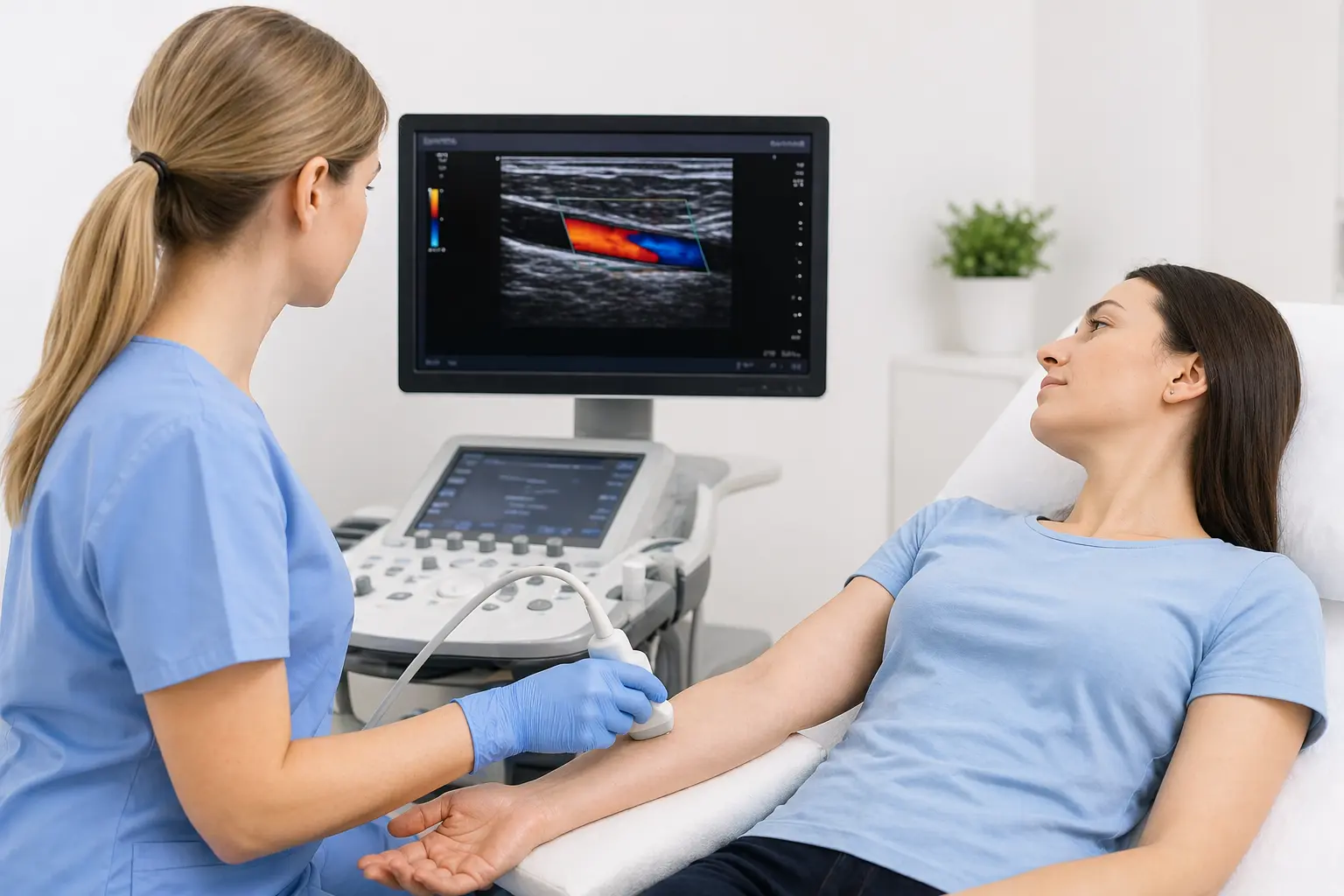
In order to determine the amount of blood flow in the arm, a type of ultrasound imaging known as an upper limb arterial Doppler is performed. This technique makes use of sound waves that have a high frequency in order to examine the way in which blood flows through vessels. This can help in locating constriction, reduced flow, or blockages.
This type of scan is frequently used in contemporary healthcare settings due to the fact that it provides images that are clinically accurate and in real time without the need for invasive treatments.
Most of the time, people refer to it by a variety of names, including:
- Upper limb arterial duplex ultrasound assessment
- Upper limb arterial duplex Doppler examination
- Upper limb arterial duplex evaluation of flow and patency
If you want to monitor circulation and identify any potential vascular problems at an early stage, the objective is the same regardless of what you label it.
Understanding Blood Flow in the Arms
This ensures that the muscles and tissues of the arms receive the oxygen and nutrients that they require, which is made possible by proper blood circulation. It is possible for blood flow in the arm to be halted, which can result in pain, a reduction in function and, in certain situations, more major vascular disorders.
The upper limbs might experience circulation issues for a variety of reasons, including constriction of the arteries, external compression, or an underlying vascular ailment. These are only a few of the potential underlying causes. Due to the fact that these changes might occur gradually, a significant number of individuals do not immediately recognise symptoms.
Because of this, early diagnostic methods such as Doppler ultrasound are extremely useful for locating abnormalities before they become more severe.
Common Symptoms of Poor Circulation in the Arms
A lot of people don’t pay heed to early warning signs because they assume they are only temporary or don’t matter.
You may experience:
- Persistent arm pain, especially during exercise
- Cold hands or sensitivity to temperature changes.
- Numbness or tingling sensations in your fingertips
- Weakness or weariness in your arms
- Reduced or unequal pulse
- Hand or fingertip skin discolouration
These symptoms are frequently connected with poor circulation and may suggest that additional testing is necessary.
Causes and Risk Factors of Upper Limb Circulation Problems
Understanding the underlying causes assists in determining when additional study is required.
Common Causes:
- Narrowing of the arteries (stenosis).
- Atherosclerosis (plaque build-up)
- Blood clots impair circulation.
- Compression of blood vessels
- Inflammatory vascular conditions.
Risk Factors:
- Diabetes
- Smoking
- High blood pressure
- High cholesterol levels
- Sedentary lifestyle
A lot of people with these risk factors may not detect symptoms right away, which is why early screening and awareness are so crucial.
When Should You Take Action?
One of the hardest things about vascular health is deciding when to get more tests. People typically ignore symptoms since they can be subtle.
You should consider further assessment if:
- There is no resolution or improvement in symptoms over time.
- Pain interferes with daily tasks.
- There is a clear lack of strength or feeling.
Based on the patient’s medical history, doctors think there may be problems with circulation.
Early diagnosis can help avoid problems and make things clearer for both patients and doctors.
How Vascular Ultrasound Helps in Diagnosis
Duplex ultrasound, a type of vascular ultrasound, is one of the best ways to check how blood flows through the body.
It helps to:
- Find arteries that are constricted or obstructed.
- Find patterns in blood flow in the arm that aren’t normal.
- Figure out how bad the circulation problems are.
- Help with quick and correct diagnosis.
The scan is safe and doesn’t hurt; thus, it is commonly used in clinical practice and can be done again if necessary.
Accurate imaging in the clinic is very important for making sure that treatment decisions are based on valid information.
What to Expect During the Procedure
A lot of people are unsure of medical scans, yet an upper limb arterial doppler is easy and not painful.
The process includes:
- A small amount of gel is applied to the arm to improve contact.
- A handheld probe moves gently over the arm to assess blood flow.
- Real-time images appear on a monitor during the scan.
Duration:
- Usually takes 20 to 30 minutes
There is no radiation involved, and patients can go back to their normal lives right after the scan.
Benefits of Early Diagnosis in Vascular Health
One of the most important things you can do to manage vascular diseases well is to get an early diagnosis.
Key Benefits:
- Stops the condition from getting worse
- Lessens the chance of problems
- Helps with prompt and targeted care
- Makes things better in the long run
- Gives comfort and clarity
A lot of people put off getting help until their symptoms get worse, yet getting help early can make a big difference in health outcomes.
The Role of Diagnostic Imaging in Modern Healthcare
Reliable imaging is a key part of making healthcare better.
In current healthcare settings, non-invasive imaging techniques are utilised to:
- Lower the amount of doubt in the diagnosis
- Make patient routes better
- Help doctors make decisions faster
- Make everything work better overall
Clinics and hospitals typically depend on reliable diagnostic support to handle a growing number of patients and make sure they get care on time.
Improving Diagnostic Workflows and Reducing Delays
In many healthcare settings, delays in diagnosis can have an effect on patient outcomes and put more stress on clinical teams.
Getting vascular imaging quickly and easily can help:
- Reduce waiting time
- Make the workflow more efficient
- Help manage patients better
- Make it easier to make decisions quickly
To make sure that patients get timely assessments, many healthcare providers are currently working to improve diagnostic pathways.
Supporting Better Patient Outcomes Through Early Assessment
Early evaluation enables healthcare practitioners to implement proactive measures in the management of vascular disorders.
This can lead to:
- Better planning for treatment
- Lower chance of problems
- Better patient trust
- Better health outcomes in general
A lot of people aren’t sure what their symptoms mean, but looking into them early on clears things up and helps you decide what to do next.
FAQ’s
How long does this scan take?
This scan takes between 20 and 30 minutes to finish.
What does an arterial doppler show?
It displays how blood moves through the arteries and can help find places where they are too narrow or blocked.
When should someone think about getting this scan?
If symptoms such as arm pain, numbness, or cold sensitivity persist, medical review and further vascular assessment are advised.